

Greenhouse growers asked to name the most important setpoint in their facility tend to converge on the usual suspects of temperature, humidity, light. For Joao Constantino, grower at Canna.biz, the answer is completely different. "My answer is always the same: the Radiation-Temperature Ratio, or RTR."
"From a plant empowerment strategy perspective, it is essential to look at the plant as a physical object embedded in an energy system," he continues. "Plants do not respond to isolated values of temperature, light, or humidity, but rather to the balance between the energy they receive and the energy they consume to grow, respire, and produce."
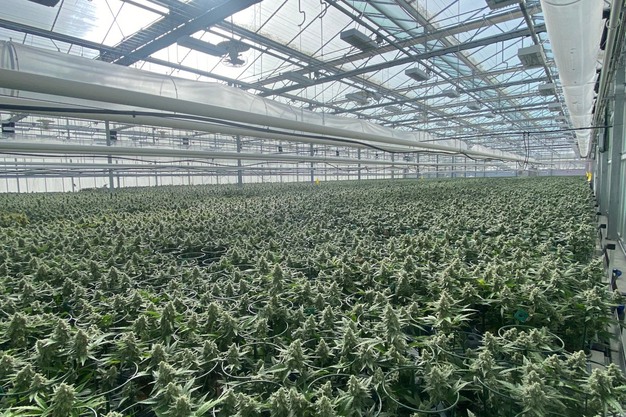 © Canna.biz
RTR over time
The scientific link between radiation and temperature has been on the record since the 1970s, but RTR as a practical tool has only entered the working vocabulary of growers in the last decade, driven primarily by Dutch researchers and by the evolution of climate sensors, control systems, and the data analysis layer that ties them together. The concept itself, in Joao explains, is one of the most direct levers a grower has for steering the crop without forcing it. "RTR can be understood as a tool that guides the plant's physiological conditions, influencing its tendency toward more vegetative or more generative growth," Joao says. "By correctly adjusting this ratio, the grower does not force the plant, but instead creates an environment in which the plant can express itself in a balanced and predictable way."
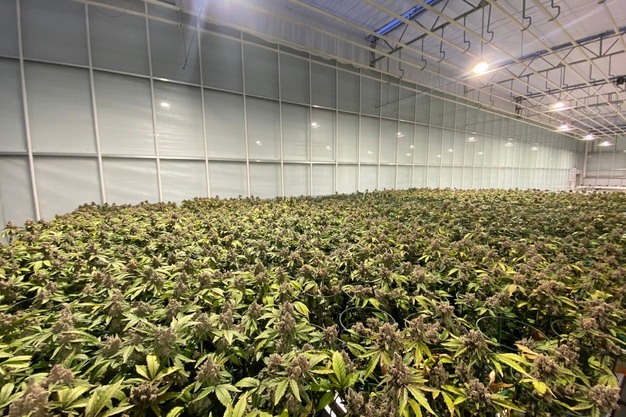
The economic argument runs alongside the agronomic one. "Proper RTR control reduces energy costs, optimizes the use of heating and ventilation, and in many cases can extend the production window without compromising plant resilience." The intuition behind it, Joao points out, is one growers already understand from observing how plants behave outdoors. "Days with higher solar radiation are usually associated with higher temperatures, while cloudy days tend to be cooler," he says. "By applying this principle inside a greenhouse, it makes sense to work with higher average temperatures on high-radiation days and lower average temperatures on low-radiation days. This approach is important because it helps maintain the plant in energy balance, adjusting sugar production to the energy actually available, whether coming from sunlight, supplemental lighting, heating pipes, or air movement generated by fans."
 © Canna.biz
Operationally, RTR functions as a temperature adjustment factor based on available radiation, expressed as a relationship between accumulated radiation and average greenhouse temperature over a given period, typically 24 hours. The grower decides, in effect, how many degrees to add to the average temperature for each unit of radiation received. Lower RTR values steer the crop toward more vegetative behavior, higher values toward generative.
In practice
To better understand it, Joao makes an example: "A crop with a minimum base temperature for physiological activity of 18°C, recently planted, where the goal is to promote structural growth. The grower opts for a more vegetative RTR, set at 1. The expected accumulated radiation over the next 24 hours, drawn from a local weather service or a greenhouse-specific forecasting model, is 1100 J/cm². On the assumption that 1°C is added to the average greenhouse temperature for every 1000 J/cm² of accumulated radiation, the target average temperature for the day works out to roughly 19.1°C, the 18°C baseline plus 1.1°C reflecting the radiation received. The greenhouse temperature is then steered proportionally to the actual energy environment the plant is sitting in, allowing sugar production to match the available radiation rather than running ahead of or behind it."
 © Canna.biz
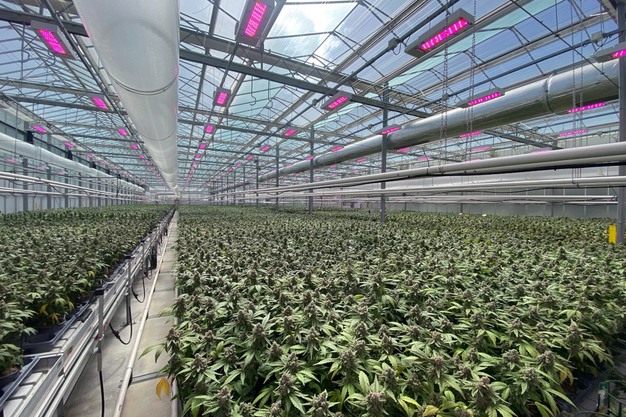
In other words, radiation is not the only energy input the plant is responding to. The greenhouse is an integrated energy system, and ignoring the rest of it is what makes RTR a partial tool when it should be a comprehensive one. "In addition to solar radiation or supplemental lighting, plants receive energy through convection, resulting from air movement generated by fans and from thermal emission from heating pipes," Joao says. "Even air circulation systems without active heating can deliver significant amounts of energy to the crop, often in the range of 30 to 40 W/m², depending on air speed and the temperature difference between the air and the leaf."
That convective energy directly influences leaf temperature, transpiration, and plant metabolism, all of which feed back into the total energy balance shaping the plant's physiological response. RTR is not an isolated number to be optimized in a vacuum but a control variable inside a broader greenhouse energy management strategy, where radiation, heating, and air circulation need to be working coherently rather than independently.
For more information:
Canna.biz
Rua Quinta da Gaga nº3, Aldeia Nova, 2560-580 Torres Vedras, Portugal
canna.biz