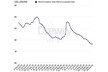


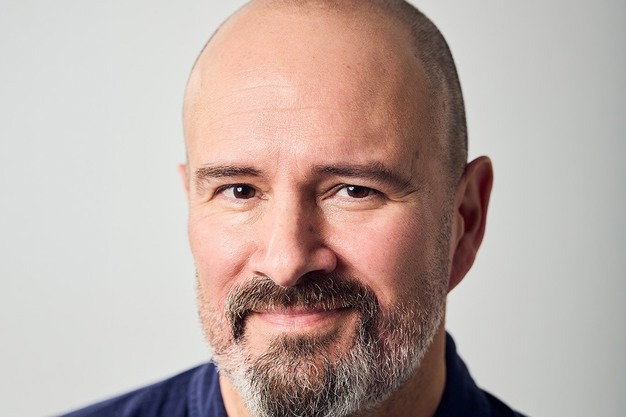
"If you focus only on THC, you are in a race to the bottom," says Daniel Cook, CEO of True Terpenes. "The logical conclusion of that is: How many milligrams of THC can I get for a penny? You take away human experience and storytelling, and you don't deliver memorable, compelling value." Three out of four cannabis businesses in the US are not profitable. Daniel believes that a significant part of why comes down to a single bad habit the industry picked up and never really shook – competing on potency instead of experience. True Terpenes works across 5,000 clients whose products collectively move over $8 billion of cannabis annually. Daniel came to cannabis through wine – a Fulbright research fellowship in Chile, then years at LVMH in Argentina. That background gave him a lens many cannabis operators do not have: what it looks like when an agricultural product category matures into something people trust. "Wine taught me that terroir, aroma and story are inseparable," he says. "Cannabis is learning similar lessons now." The company enters the product innovation cycle early, mapping what a brand is trying to deliver experientially before formulations are set, then building toward that rather than arriving later to sell an ingredient. "We first discover what products the client has, what their capabilities are, what they want to do," Daniel explains. "Based on what they wanted and their vision, we build solutions for them. We develop a sensory roadmap. We are not interested in pushing ingredients; what we offer is a fully integrated solution."
Smelling it
The science underneath that approach is more complicated than the industry has historically acknowledged. Most of the conversation around aroma in cannabis has defaulted to terpenes, partly because terpenes are measurable and fit neatly onto a label. But terpenes, Daniel says, are only part of the story. "Aroma is not only driven by terpenes," he says. "The cream, the gas, the fruit are shaped by more delicate and volatile aroma molecules. The most expressive top notes – the fresh jar appeal – are created by volatile compounds. These give strains their unique character and they are also the hardest to capture and safeguard. The parallel to wine only goes so far. In wine, time is usually an asset. In cannabis, after curing, it runs the other direction entirely. Every hour after harvest is subtraction. "Oxygen, heat, light, work on the volatile compounds – the ones that make craft flower worth growing – and by the time the product clears the supply chain and reaches a shelf, the character that defined it may be gone. "If you take aroma away from cannabis, you are stuck in a commoditized world," says Daniel.
 © Daniel Cook
True Terpenes has spent six years building the supply chain infrastructure to address that problem. The company runs its own cultivation operation in Oregon, currently 100 acres, hand harvested and frozen for extraction, and uses the grow as a live research environment, tracking what happens to volatile compounds at each stage under different conditions. "Our lens is sensory science at every step," Daniel says. "It's like catching sand in your hand," he says with a laugh. "It's given us the perspective on what happens – and what gets lost – at each point in the chain."
Restoring the aroma
True Terpenes' answer is a broad ingredient matrix, assembled in a way that can restore fidelity. The framing matters: Daniel is careful to say "restore," not "add." The goal is recovering what processing and time destroys, not compensating for something that was never there to begin with.
The company's most recent market launch, Headstash, is the clearest expression of that approach so far. Built around five live extract bases drawing on iconic strain profiles, Haze, Gelato, Kush, Sour Diesel, and Purple Haze, it launched across pre-roll and vape formats in multiple global markets. Each profile was built to close the gap between what a strain smelled like at its peak and what typically survives to the consumer. "Even premium flower can lose up to half its aromatic signature between harvest and the shelf," Daniel says. "Curing, heat, time — it all degrades. That's the gap Headstash was built to close." "These are very faithful experiences," Daniel says. "We are going to double the size of the portfolio and keep building on the foundation. The directions we can take are infinite."
The clearest evidence for Daniel's thesis came from the Oregon Cultivation Classic, a blind tasting study conducted before COVID. Nearly 300 consumers evaluated craft cannabis flower with no labels, no branding, no numbers. The results were unambiguous: aroma was the single strongest predictor of enjoyment. Not THC content. Not terpene percentage. And the finding that most directly inverts the industry's marketing logic: the majority of panelists, when randomized and blinded, preferred samples that tested under 20% THC. "The nose beat the lab," Daniel says. "The human nose has more of the genome dedicated to it than sight, touch, and taste combined," he says. "Aroma bypasses logic, it goes right to where memory, emotion, and pleasure live. Every other sense is routed through reason first. "That's not a small distinction. That's the whole game."
The broader ask is for the industry to build what wine built forty years ago: a shared sensory language, a standardized aroma wheel, the kind of foundation that lets producers, retailers, and consumers talk about what they are actually tasting and smelling. "Wine had a huge head start," Daniel says. "Ann Noble, a sensory chemist at UC Davis, developed the wine aroma wheel in the early 1980s. It gave winemakers, sommeliers, and consumers a shared vocabulary — and it changed how the whole category was understood. Cannabis needs that same foundation. We're in a position to help build it. "We're not selling flavor," Daniel says. "We're rebuilding trust in the senses. That's a bigger project than an ingredient."
For more information:
True Terpenes
Tel: +1 (888) 954-8550
trueterpenes.com