

After more than 25 years in horticulture and experience with a lot of different crops, João Constantino has witnessed the industry change dramatically. What once relied heavily on intuition and "green fingers" is now increasingly guided by data and plant physiology. By embracing the Plant Empowerment philosophy, the Portuguese grower made the transition from traditional methods to a data-driven strategy. One that is now delivering impressive results in medicinal cannabis cultivation.
Adapting to a changing world
Constantino's journey into Plant Empowerment began about eight years ago. As a successful ornamental grower in Portugal, he realized that the increasing bans on traditional chemicals were making his old strategies obsolete. "I faced a problem," he recalled. "If I was not changing… I would soon be out of the market".
 © Canna.biz
His transformation began with a single book found on LinkedIn. By studying the principles of Plant Empowerment, he moved beyond "green hands" and began to understand the actual physics of why certain methods worked. He started small, using a manual infrared sensor to measure leaf temperature, before gradually implementing high-tech solutions like vertical ventilation, diffusion screens, and CO2 enrichment.
A game-changer for medicinal cannabis
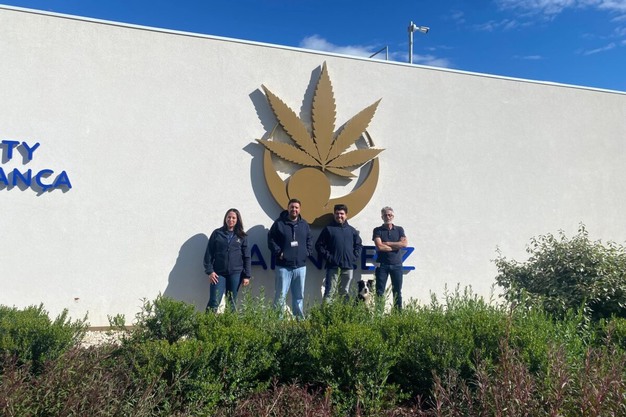
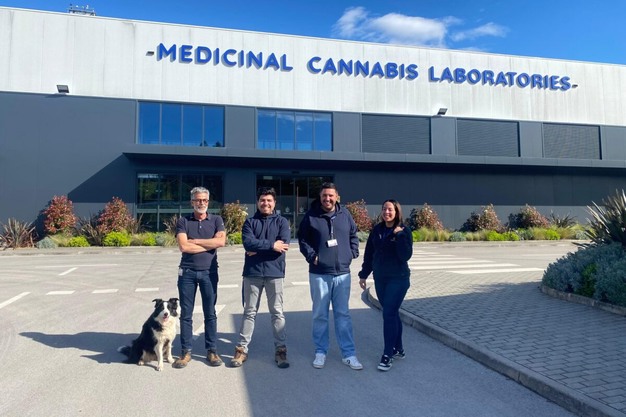
In 2023, Constantino transitioned into the highly regulated medicinal cannabis industry. His facility in Portugal utilizes a high-density, high-efficiency rotating bench system in a Venlo greenhouse. Here, he has proven that Plant Empowerment isn't just for traditional crops like tomatoes; it is the key to unlocking the potential of medicinal plants.
The results have been nothing short of extraordinary. By focusing on maintaining a stable Radiation to Temperature Ratio (RTR) and protecting the plant against heat emission, Constantino achieved a breakthrough. "All the problems disappeared just like that," he explained. "No more powdery mildew, no more botrytis, and THC levels immediately stabilized in all batches".
The invisible power of the microbiome
For Constantino, Plant Empowerment and Plant Health are inseparable. He has integrated microbiome management into his strategy, monitoring soil life every two months to forecast potential stressors. On the nutrition side, he replaces a portion of total nitrogen with organic forms and amino acids to stimulate beneficial bacteria and fungi. To gauge plant health, he uses a simple garlic squeezer to test plant sap, maintaining that a Brix level of 12 indicates an exceptional plant with high resistance, while anything below 8 signals impending pest pressure. The results speak for themselves: by building a resilient crop through climate and nutrition management, pests like spider mites and aphids have virtually disappeared from his operation, requiring only minimal use of beneficial insects for maintenance.
Lessons for the modern grower
One of the most inspiring aspects of Constantino's approach is his belief that anyone can start, regardless of their technology level. Whether growing peonies outdoors or cannabis in a high-tech greenhouse, the principles of controlling radiation and managing soil life apply universally. On the question of discipline, he is unequivocal. "Discipline is the key," Constantino says, adding that data must be registered and observed daily to ensure the plant stays in the line. He also cautions against chasing equipment before understanding the plant's actual needs, whether that is light diffusion or vertical airflow, and argues that the right investment only makes sense once those needs are properly understood. For growers looking to reduce chemical inputs, he is equally clear that there are no shortcuts: in a contaminated facility, quitting chemicals overnight is not an option, and the transition requires a gradual, selective strategy in which pest and disease pressure decreases year by year.
 © Canna.biz
The future of modern farming
João Constantino's story is a testament to the power of open-mindedness. By stepping back from a prestigious general manager role to focus on implementing these principles as a head grower, he has demonstrated that the future of farming lies in the conscious use of resources and the sharing of knowledge.
"Plant Empowerment will be the base for the future strategy of modern farming," he concludes. For enthusiasts and professionals alike, his success serves as a roadmap: by empowering the plant, you empower the business.
For more information:
Plant Empowerment
Tel.: +31 10 460 81 08
[email protected]
www.plantempowerment.com