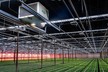


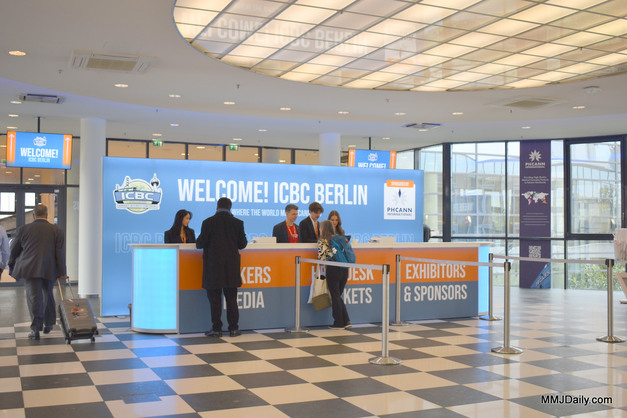
As much business one wants to talk at the ICBC, we are still talking cannabis, so it's not surprising that one of the panels during the conference was titled Modernized Cultivation Technologies. Five industry veterans spent the better part of an hour pulling apart the variables that separate a dialed-in facility from an expensive nightmare.
 © Priscilla Heeffer | MMJDaily.com
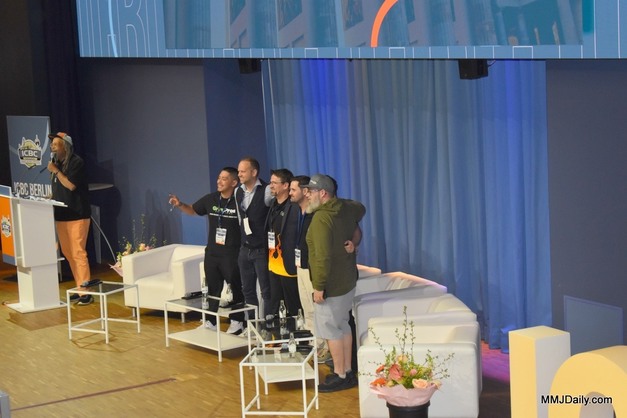
The panel brought together Benjamin Matsuda, spectral crop steering specalist from Grow Pros Solutions; Mikhail Sagal, CEO of TSRgrow, a company known for its remote-powered LED lighting systems; Thomas Gibson, founder and CEO of Grandmaster LEDs; Dastan McLean of Heartland Flower International, a breeder and cultivator from Alberta with over three decades of experience; Deron Caplan, managing partner at Sostanza, a full-service horticulture and facility design consultancy; the panel was moderated by Sonny Moerenhout from Cultivators.
Energy and lighting
With all that's going on in the world, energy was the opening topic, with the conversation quickly moving past the obvious. Lighting efficiency obviously is crucial, the panel agreed, but HVAC is the piece that the industry keeps underestimating. "HVAC has such an impact on every other aspect of the facility," one panelist commented, pointing to transpiration rates as a variable that generic building contractors routinely miss. Contractors experienced in standard construction but not in cultivation often undersize or mismatch systems, with costs that compound over time. Thomas put it bluntly when he said that there's no longer a justification for running HPS over LED. With how the technology has advanced from those wild, early LED days, this sentiment isn't surprising.
Spectrum tuning generated the most technically dense exchange of the session. Thomas argued that a single-channel light cannot unlock the full potential of a cultivar's genetics, and that the ability to manipulate blue light across different growth stages, suppressing stretch early, then reintroducing it in the final weeks to trigger a defense response and boost resin production, is a meaningful lever. Far-red drew particular attention. Thomas and Mikhail both pointed to the Emerson effect as one of the more misapplied concepts in cannabis lighting right now. Pairing 730 nanometer far-red with 660 nanometer red and white spectra at lights-on to stimulate both photosystems, and using far-red alone at lights-off to put the plant to sleep, is well-supported, they said, but the industry is applying it inconsistently. Mikhail added that Grandmaster was among the first to use 2200 Kelvin diodes, producing a 600 to 620 nanometer yellow-amber spectrum, and that the difference between that range and a standard 660 nanometer red is substantial in terms of bulking performance.
UVC light was flagged by Thomas as one of the more underappreciated developments coming down the line. Dismissed by many, he argued it has already demonstrated the ability to eradicate thrips in side-by-side trials where predator insects and systemic pesticides both fell short. He believed that within five years, UVC could replace the majority of pesticides in indoor cannabis cultivation.
Data
The back half of the panel pulled the conversation toward data and consistency, and it was here that some of the more pointed observations landed. Dustin, who described himself as a trichome grower first, said the industry has developed a tendency to grow by numbers rather than by plant. "Your plants are telling you it needs to be somewhere else," he said, pushing back on what he called analysis paralysis. Too many growers are leaning on technology as a substitute for horticultural knowledge, and the result is facilities where sensors are trusted over observation. Mikhail echoed the point, and he said that one of the clearest differences between North American and German operators is that German growers tend to apply the scientific method more rigorously, changing one variable at a time rather than several simultaneously.
Deron argued that the value is not in volume but in linkage. Tracking environmental and cultural data batch by batch, and tying it to output, is what turns numbers into decisions. AI, he acknowledged, adds another layer of potential, but only if the underlying data is collected meaningfully in the first place.
The closing remark of the session wrapped up things succinctly: "Technology second, plants first, not the other way around."
 © Priscilla Heeffer | MMJDaily.com