

Travis Hall, Head Grower at Native Roots' Mothership facility in Colorado, has spent nearly a decade watching cultivators defend practices that data no longer supports, and running the numbers that prove it.
"When I first joined the industry, really there was this notion of bigger roots equal bigger fruits," Travis says. "Everyone was growing in the largest pot sizes that they could find. Even us, we were going in 7 to 10 gallon pots, transplanting two times before we came into bloom."
That logic has since collapsed. Native Roots now runs one-gallon pots, a reduction that most legacy operators would have considered a non-starter a few years ago. The shift was enabled by crop steering, a data-driven cultivation methodology that manages vegetative and generative phases through precise control of irrigation timing, substrate moisture content, and environmental inputs. By controlling plant behavior at the substrate level rather than through container volume, growers can drive yield and quality outcomes that large pots were once assumed to provide automatically. Travis says the transition increased yields, improved quality, and reduced labor simultaneously.
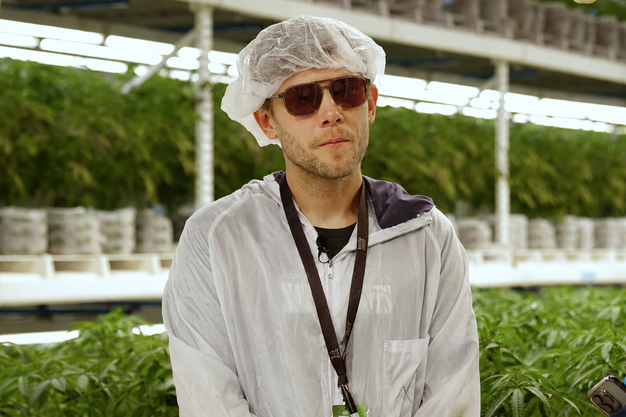 © Thrive Agritech
The other conversion Travis has overseen at the Mothership facility is the move from double-ended HPS to LED. Native Roots reduced power consumption by 40% in the process, while maintaining or improving performance across yield, cannabinoid content, THC potency, and visual quality. "We've seen more dramatic colors in our flower," Travis notes.
The reluctance he still encounters among cultivators toward LED adoption tracks back to the early days of the technology, when the category was populated by underpowered fixtures marketed with inflated replacement claims.
"In the beginning, manufacturers were really looking to sell their product," Travis says. "They were putting out lights that were great for growing lettuce and trying to claim that a 300W fixture would replace a 1,200W fixture. And really, cannabis being a C3 plant, it just requires a little bit more of a rich spectrum than what they were providing initially."
Cannabis as a C3 plant requires high photon density and a broad spectral range to drive photosynthesis efficiently. Early LED products optimized for leafy greens operated on narrow spectra insufficient for the cannabinoid and terpene expression cannabis requires, and their output was too low to match HPS light intensity at canopy level. The fixtures that failed to deliver in those early trials left a reputational mark on the category that persisted well past the point where the technology had actually caught up. Travis says the improvements in photon density understanding and fixture design over the last decade have eliminated the original objections. "From there, the innovations and technology have just improved in the last 10 years," he says.
For more information:
Thrive Agritech
1(800) 205-7216
[email protected]
thriveagritech.com