


Cannabis cultivation has gone through several rounds of technological adoption over the past decade, and the resistance to new tools has rarely disappeared on its own. What growers dismissed five years ago is now standard practice, and what they are dismissing today is where the next round of evidence is accumulating.
Post-harvest
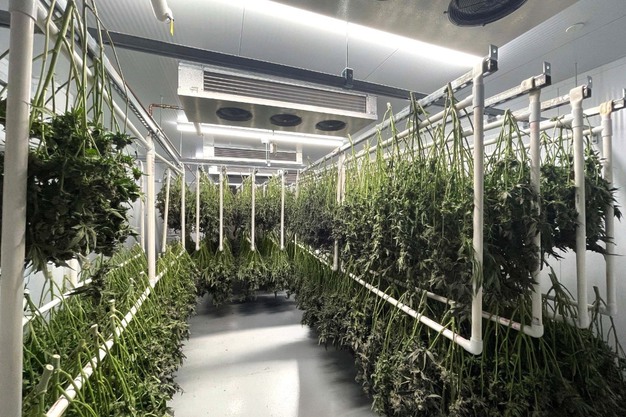
David Sandelman, Chief Technology Officer and Co-founder of Cannatrol, has watched the cycle from the supply side. "I think technology in general tends to be viewed skeptically by anyone working in a skilled craft, especially if the technology promises to improve current practices or outcomes," David says. "This would certainly include cannabis cultivation. But the interesting thing is that most crafts involve at least an element of science, and there is a lot of science involved in agriculture and growing cannabis. So, while in the past growers may have underestimated things like advanced lighting or new grow mediums, once they see the benefits in the grow room, they tend to reconsider their thinking."
 © Cannatrol
The current holdout is post-harvest, a part of the process that still runs largely on knowledge passed grower to grower. "Today, the hesitance or wariness we hear from growers tends to fall mostly on advanced post-harvest technology," David says. "This may be due to the fact that I focus on the post harvest a lot in my conversations, but I think it also is a sign of the maturing industry. The dry, cure and storage process is one of the last remaining parts of the cannabis industry that still relies heavily on legacy practices and knowledge passed down from grower to grower. But as with all other technological advancements, once growers realize how science can better manage the post harvest, they never want to go back to their old processes."
Airflow
Xavier G. of Avitas Global and Michael Williamson, Director of Cultivation at Pipp Horticulture, both point to airflow as the variable growers most consistently struggle with. Xavier locates the problem in what happens once conditioned air leaves the equipment. "Growers often focus on temperature, humidity, and equipment specs, but underestimate what happens once air actually enters the room," Xavier says. "Once you see how much crop performance, disease pressure, and uniformity are shaped by airflow at canopy level, once you actually measure inside the canopy, it becomes obvious where things are going wrong."
Michael has trial data behind the same observation. "One of the most consistently underestimated, and under-studied, technologies in cultivation is airflow," Williamson says. "Not just having fans, but designing for intentional, uniform airflow across the entire canopy. Most facilities are built around temperature and humidity setpoints, but airflow is what actually makes those conditions real at the plant level. Once growers get it right, the impact is immediate. You see more uniform growth, more consistent drybacks, and fewer microclimates that lead to variability or disease pressure. Through our VAS airflow research trials in collaboration with the Cannabis Research Coalition, led by Dr. Allison Justice, we have also observed meaningful performance and yield gains tied to airflow optimization. In these trials, the highest airflow velocity group showed a 20% increase in dry weight and a 5% reduction in overall trim, outcomes that surprised even us."


Cultivation as product-driven discipline
Robert Sciarrone, Chief Revenue Officer at Curaleaf, describes a shift of a different kind over the past year. "The biggest shift has been a fundamental upgrade in our genetics and how we think about cultivation as a product-driven discipline," Robert says. "Over the past year, we have worked closely with the team from Dark Heart to elevate our entire genetics program, applying their deep expertise to refine and strengthen our cultivation approach across the organization. That effort has driven meaningful improvements in flower quality, consistency, and strain diversity at a national scale."
 © Curaleaf International
The market drove the decision, Robert says, more than the agronomics did. "What drove that decision was simple. The market is telling us very clearly that quality wins. Consumers are more educated, more selective, and increasingly brand loyal. To meet that demand, you need more than operational efficiency. You need craft quality genetics that can perform consistently at scale. We have already seen that translate into new premium launches and stronger performance across our flower portfolio. This is not a short-term initiative. It is a long-term investment in building a cultivation engine that can support innovation and leadership in every market we operate in."
Got this far and missed part 1, part 2, and part 3? You have time to catch up before our last installment of this special, tomorrow!